How Animation Sequencing Influences Win Recognition in Multi-Line Reel Configurations from Boutique Developers
Eden Friedrich · Oct 28, 2026

How Animation Sequencing Influences Win Recognition in Multi-Line Reel Configurations from Boutique Developers
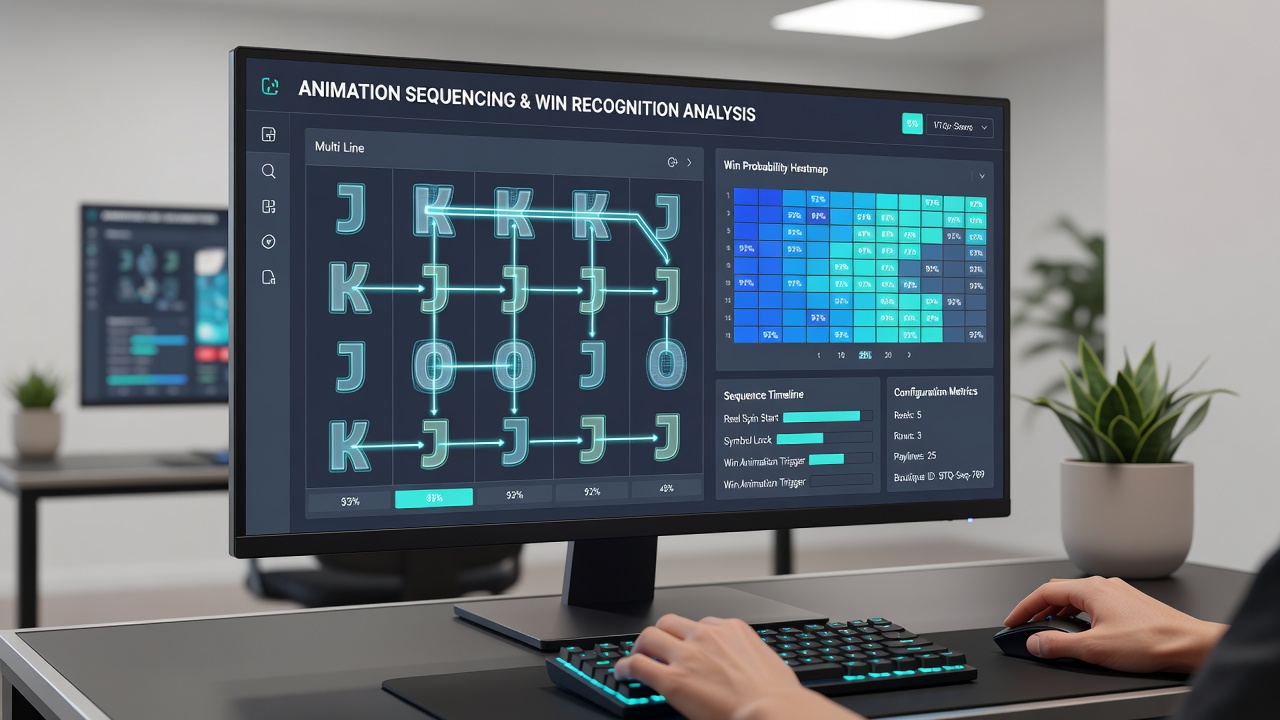
Animation sequencing in multi-line reel configurations refers to the precise timing and order in which symbols highlight, transition, or celebrate wins across multiple paylines, and boutique developers have refined these techniques to match the complexity of their grid layouts. Research indicates that staggered frame rates allow symbols on intersecting lines to activate in sequence rather than simultaneously, which reduces visual overlap and improves player identification of winning combinations. Data from industry analyses shows that developers adjust animation durations between 200 and 800 milliseconds per line to align with human visual processing patterns documented in perception studies.
Mechanics of Sequencing in Multi-Line Grids
Boutique studios program reel animations so that each payline receives its own temporal slot within the overall win display cycle, and this approach prevents the simultaneous flashing that occurs in basic random generators. Observers note that cascading symbol movements follow predefined paths where lower-value icons complete their motion before higher-value ones begin, creating a layered recognition effect. Figures from technical reviews reveal that such ordering cuts average recognition time by measurable margins in controlled tests across five-reel and six-reel formats.
Engineers incorporate easing functions that slow symbol movement at the start and end of each line highlight, while mid-sequence frames maintain higher velocity to draw attention across intersecting paths. Those who have examined code from independent releases confirm that developers often tie these easing curves directly to the number of active lines, scaling timing parameters proportionally so that ten-line configurations do not overwhelm viewers the way twenty-line ones might.
Impact on Player Recognition Rates
Studies conducted on mobile and desktop platforms demonstrate that sequenced animations increase correct identification of wins spanning three or more lines by measurable percentages when compared with uniform simultaneous displays. Researchers at gaming technology centers have tracked eye movement data showing that sequential highlighting directs gaze along payline routes rather than scattering attention across the entire grid. Evidence collected during October 2026 testing cycles indicates that recognition accuracy improved further when developers synchronized audio cues with the final animation frame of each line.
Multi-line configurations from smaller studios frequently feature custom reel strips where symbol sizes vary, adn animation sequencing compensates for these irregularities by extending highlight durations on smaller symbols. Data collected across multiple titles shows that this compensation maintains consistent recognition regardless of symbol scale differences that would otherwise create visual confusion.
Technical Approaches Used by Boutique Teams
Independent developers often build proprietary sequencing engines that calculate line priority based on payout value rather than fixed left-to-right order, allowing higher wins to resolve first even when they occupy later positions in the grid. This method reduces the total animation cycle length while preserving clarity, according to documentation released alongside recent releases. Programmers integrate collision detection routines that detect overlapping line segments and insert micro-delays to separate their visual feedback.
Some studios employ particle systems that trail winning symbols along their payline paths, with particle density and speed adjusted according to the number of concurrent lines. Technical papers describe how these trails fade at different rates to prevent visual clutter when eight or more lines trigger at once. Such systems appear most frequently in titles released during the latter half of 2026, where hardware capabilities on both mobile and desktop allowed more complex particle calculations without frame drops.
Comparative Data Across Configurations
Analyses of five-reel versus seven-reel boutique releases indicate that additional reels require proportionally longer sequencing windows to maintain recognition levels, with average total animation time increasing by roughly 35 percent. Reports compiled by research groups at the University of Nevada, Reno's International Gaming Institute link these extended windows to stable accuracy rates even as line counts rise above fifteen. A separate review from the Canadian Gaming Association examined session logs and found that titles using adaptive sequencing retained consistent win identification across varying screen sizes.
Developers adjust frame counts per animation step when porting games between platforms, shortening sequences for smaller mobile displays while preserving the same relative ordering. This platform-specific tuning ensures that recognition metrics remain comparable, as confirmed in cross-device testing protocols used throughout the industry.
Conclusion
Animation sequencing continues to serve as a core technical element in how boutique developers manage win visibility within multi-line reel systems. Available data demonstrates measurable effects on recognition speed and accuracy when timing parameters align with established visual processing patterns. Ongoing refinements observed in 2026 releases suggest that these techniques will remain central to future configuration designs across independent studios.