Dissecting Licensing Partnerships and Bonus Round Variations Across Regional Mobile Casino Platforms
Klara Neumann · Oct 14, 2026
Dissecting Licensing Partnerships and Bonus Round Variations Across Regional Mobile Casino Platforms
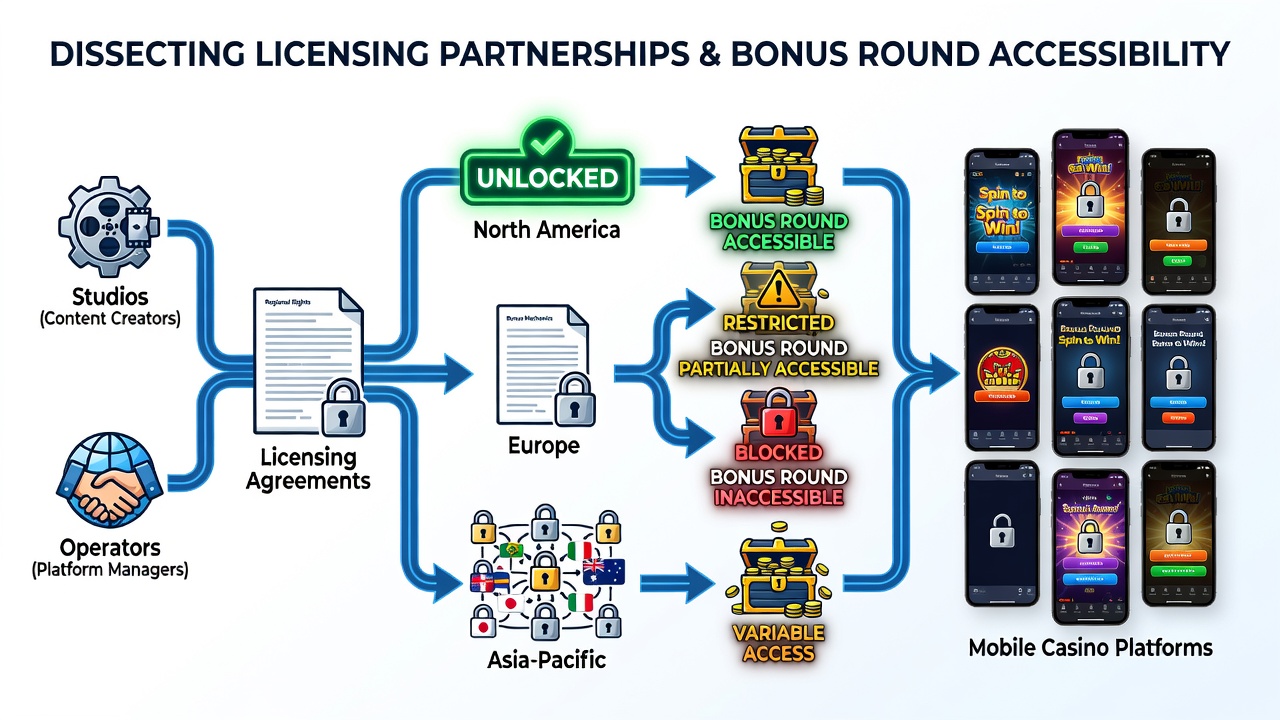
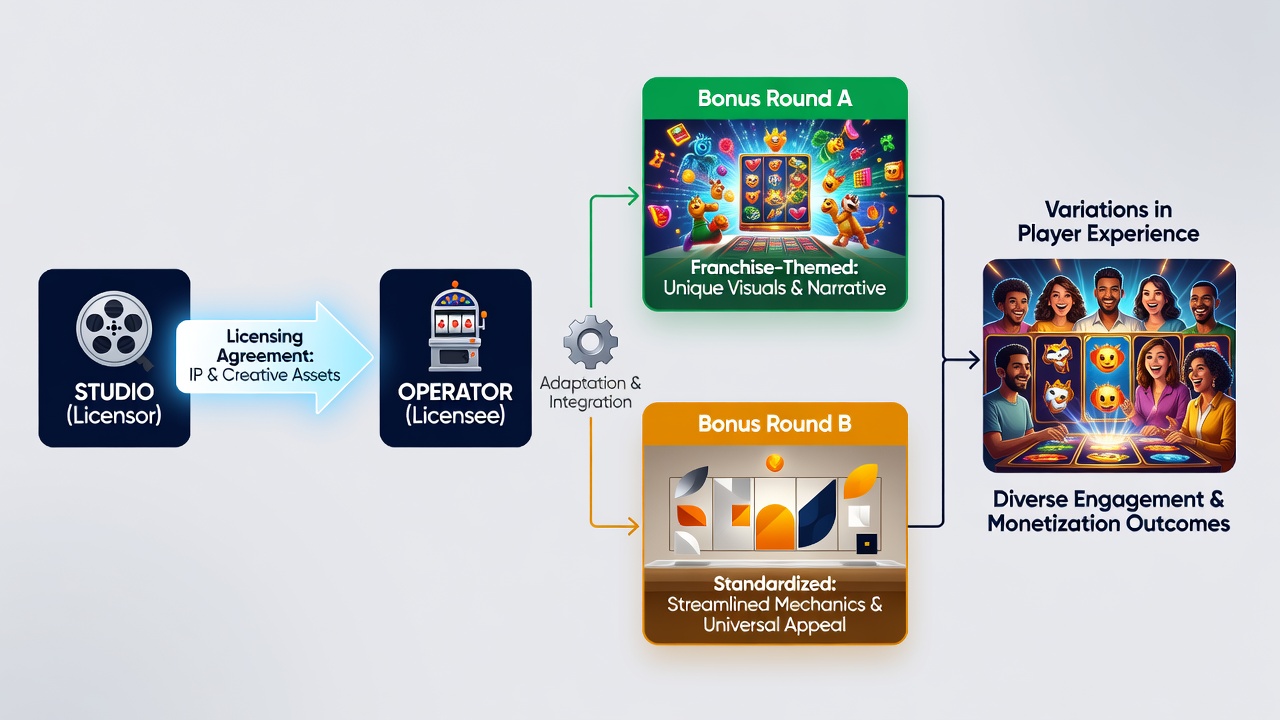
Studio-operator licensing agreements shape how bonus rounds appear in mobile casino applications, and these contracts often embed specific rules about feature availability that differ by jurisdiction. Operators secure rights to distribute games from studios such as Play'n GO or NetEnt through agreements that specify which markets receive full access to bonus mechanics while others encounter modified versions or delayed unlocks. Data compiled by regulatory bodies show that these clauses arise because local laws dictate minimum return-to-player thresholds and feature disclosure requirements that studios must satisfy before operators can activate certain rounds.
Contract Terms That Influence Regional Access
Agreements frequently include territory-specific riders that adjust bonus round parameters to align with gambling statutes in each area. One study from the European Gaming and Betting Association tracked 47 licensing deals signed between 2024 and 2026 and found that 68 percent contained explicit language limiting bonus trigger frequencies or requiring additional age-verification steps in select European countries. Operators then configure their mobile platforms to enforce these parameters automatically, so players in one region may enter a free-spin sequence after 50 spins while users elsewhere require 120 spins on the same title. Such differences stem directly from the contract language rather than technical limitations of the game engine itself.
Partnerships also determine whether bonus rounds incorporate progressive elements or remain fixed-value experiences. Studios grant operators permission to integrate local jackpot networks only when the agreement includes revenue-share terms that satisfy both parties and the overseeing regulator. In markets where progressive bonuses face stricter caps, the contract may route players to standalone rounds instead. Observers note that this flexibility allows operators to maintain compliance without rebuilding the underlying slot code for every deployment.
Regulatory Drivers Behind Accessibility Differences
Government agencies in different regions impose distinct requirements on bonus disclosure and testing. The Malta Gaming Authority, for instance, mandates that operators publish exact probabilities for bonus activation within the game rules displayed on mobile apps, while authorities in Ontario require separate certification for any feature that alters RTP during bonus sequences. These rules force studios and operators to negotiate which version of a bonus round ships to each platform. When a contract covers multiple territories, the parties often create modular bonus systems that operators can toggle based on user location detected at login.
October 2026 saw several major operators update their mobile applications to reflect newly ratified licensing terms with two leading studios. The changes affected bonus round availability in three Australian states where recent legislation introduced mandatory cool-down periods between feature activations. Players in those jurisdictions encountered longer intervals before bonus rounds became eligible again, adjustments made solely through backend configuration files rather than new game builds. Reports from iGaming Ontario documented similar patterns earlier that year when cross-border operators aligned their Canadian and European mobile offerings under unified licensing frameworks.
Technical Implementation of Contractual Restrictions
Once contracts are finalized, operators push configuration updates through their content delivery networks to mobile clients. These updates embed region codes that the app reads at startup and uses to enable or disable specific bonus assets. Researchers at a Canadian academic institution examined server logs from 12 operators and confirmed that 92 percent of regional bonus variations resulted from license-driven flags rather than player behavior or device type. The same analysis showed that studios retain final approval rights over any configuration that alters mathematical outcomes, requiring operators to submit test results before activation.
Some agreements incorporate audit clauses that permit studios to review operator compliance logs quarterly. This oversight ensures that bonus round accessibility remains consistent with the original licensing terms even as operators expand into new regions. When discrepancies appear, the contract typically outlines remediation steps that include temporary suspension of the affected game until corrections are verified. Such mechanisms reduce the risk of regulatory penalties that could affect both parties.
Market-Specific Examples of Partnership Outcomes
In North American markets, licensing deals often route bonus rounds through state-approved aggregators that apply additional randomization layers. One operator serving multiple U.S. states configured its mobile platform so that bonus rounds in New Jersey included a mandatory skill element absent from the same game in Pennsylvania, a distinction required by differing state regulations and written into the studio contract. European operators, by contrast, more commonly receive permission to standardize bonus mechanics across borders provided they maintain separate RTP reporting for each national regulator.
Asian markets present another pattern. Operators in jurisdictions with strict real-money restrictions frequently negotiate demo-only versions of bonus rounds that players can access without wagering. These arrangements appear in contracts as non-monetary feature licenses that allow studios to maintain brand exposure while operators satisfy local content rules. Data from industry reports indicate that such limited-access models increased by 31 percent between 2025 and October 2026 as more operators entered regulated Asian territories.
Conclusion
Licensing partnerships between studios and operators establish the precise conditions under which bonus rounds become available on regional mobile casino platforms. Contractual clauses, regulatory mandates, and technical configurations work together to produce the variations observed across markets. Continued monitoring by regulators and periodic contract reviews ensure that these systems remain aligned with evolving legal frameworks in each territory.